
The first impression of dormitory life often doesn’t come from orientation activities or newly met roommates but from a very specific moment: the lights are out late at night, the room temperature fluctuates between hot and cold, the bed is too hard, and the surroundings are filled with unfamiliar sounds. For many college students and young people who have just entered communal living, the dormitory is not an extension of “home,” but a space that needs to be readjusted to.
It is in this environment that the blanket begins to reveal its value beyond expectations. It’s not just about keeping warm; it’s one of the few comfort variables in dormitory life that you can completely control. Choosing the right blanket can often significantly improve the quality of rest and psychological relaxation within limited space and conditions, which is a major reason for the continued growth in searches related to dormitory room blankets.
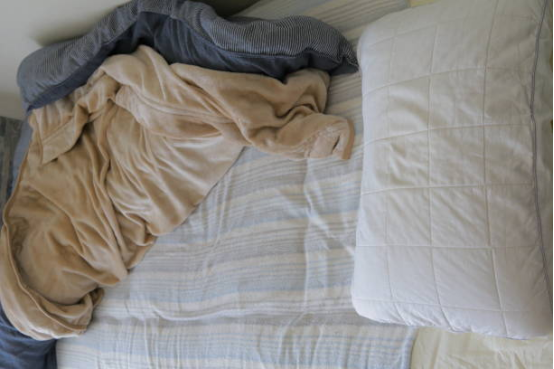
The real challenges of dormitory environments are often underestimated: the “comfort deficit.”
From a practical standpoint, most dormitories are not designed for “long-term high-quality living.” Public air conditioning cannot meet individual temperature needs, bed sizes are limited, and there are objective limitations on cleaning frequency and environmental stability. More importantly, dormitory life is often accompanied by inconsistent sleep schedules, light pollution, and noise issues.
In such an environment, students can easily fall into a state of “functional rest”—getting enough sleep but unable to truly restore their energy. Research shows that the quality of sleep and rest is highly correlated with whether the body feels safe and relaxed, and touch and temperature are key factors in this.
This is why college blankets are gradually being seen as a “necessity” rather than a decoration among students. Their purpose is not to change the dormitory conditions themselves but to create a relatively stable and predictable microenvironment for individuals under existing conditions.
How a Blanket Affects Rest and Mood
In a dormitory setting, the value of a blanket lies primarily in its tactile experience. Compared to mattresses and sheets, blankets are touched more frequently and are more easily perceived. Their soft yet not overly slippery surface helps relax muscle tension and reduce unconscious strain.
Secondly, there’s the weight and the feeling of being enveloped. Many students mentioned in interviews that they found it easier to enter a deep restful state after covering themselves with their familiar blankets at night. This isn’t just psychological suggestion but rather a natural bodily response to pressure. Moderate wrapping sends a “safe environment” signal to the nervous system, thereby reducing alertness levels.
Secondly, there’s the temperature regulation capability. Dormitory air conditioning is often difficult to control precisely, while a blanket provides “localized regulation.” Whether it’s a drop in temperature late at night or a slight chill in the morning, it can provide a comfortable zone for each individual without disturbing others. This point is repeatedly mentioned in user feedback for the student comfort blanket.

Durability and ease of cleaning are especially important in student life.
Unlike a home environment, dormitories place higher demands on the durability and maintenance costs of items. Frequent moving, limited storage space, and communal laundry facilities all amplify cleaning difficulties. If a blanket becomes pilled, deformed, or difficult to clean after only a few weeks of use, its comfort value will rapidly decline.
Industry experience shows that students tend to choose fabrics that are structurally stable and resistant to deformation. The reason is simple: these fabrics can withstand frequent use and repeated washing without requiring additional maintenance costs. This “worry-free” experience is a scarce resource in dormitory life.
Furthermore, quick-drying speed is often overlooked. Public laundry rooms have limited usage time, and if the blanket dries too slowly, it will directly affect the continuity of use. Therefore, many discussions about dormitory room blankets ultimately return to the practical question of whether they are suitable for dormitory laundry conditions.
From Function to Psychological Belonging: Blanket’s Implicit Role in Dormitories
Beyond physical comfort, a blanket also serves a subtle psychological function: helping to establish personal boundaries. In a shared dormitory environment, it is difficult for individuals to have completely private space, and the bed is often the only “personal territory.”
When a blanket is spread out or used to cover the body, it visually and tactilely defines a boundary. This boundary is not about isolating others but rather about providing a brief sense of solitude for both body and mind. This small but stable private space is especially important for students just entering university and needing to adapt to communal living.
Many students have mentioned in their experience sharing that when academic pressure increases or emotions fluctuate, going back to bed and wrapping themselves in a blanket is a quick way to recover. This is one of the reasons why student comfort blankets are frequently discussed—they serve not only for sleep but also for mood regulation.

Improving the quality of dormitory life often comes from the details.
Many people expect to improve their dorm experience through a one-time major renovation, but in reality, truly effective changes often come from optimizing details. Lighting, storage, and bedding are all controllable variables, and Blanket is one of the most cost-effective options.
It doesn’t require extra space, yet it continues to function during daily rest periods. It doesn’t change dormitory rules, but it creates a more comfortable living rhythm for individuals. This understated and stable improvement perfectly aligns with students’ core needs for practicality and cost-effectiveness.
In the long run, good rest quality can positively impact learning efficiency and emotional stability. In other words, a suitable blanket is not just an added bonus in a dormitory but a crucial infrastructure that supports daily routines.
Back to a simple question
If dormitory life is destined to be full of compromises, then which parts deserve serious attention? Perhaps the answer is not complicated—those details that we encounter every day and that directly affect our physical sensations are the places where we should invest the most effort.
As night falls again, the lights go out, and the environment returns to silence. Do you have a way to truly relax your body? Perhaps, starting with a blanket truly suited to dormitory life, the change in quality of life has already quietly begun.