
Standing in the home textiles section of a high-end department store, your hand gently brushes against the $800 blanket, the touch as delicate and soft as touching clouds. However, when your gaze shifts to the right and you see a similar-looking, ordinary wool blanket priced at only $150, a rational voice begins to scream in your head: “Aren’t they both made from sheep wool? Why is the former five times more expensive?”
This is the ultimate question that has puzzled countless consumers. If you think that this high premium is just a so-called “brand tax” or “luxury goods IQ tax,” then you may have misunderstood this material, which is known as “soft gold.”
In fact, this is not only a commercial pricing strategy but also a direct reflection of biology and physics. Today, we will set aside those vague adjectives, put on a microscope, and delve into the microscopic world of fibers. You will find that what determines the price of this blanket is not the logo, but those micrometer-level differences invisible to the naked eye.
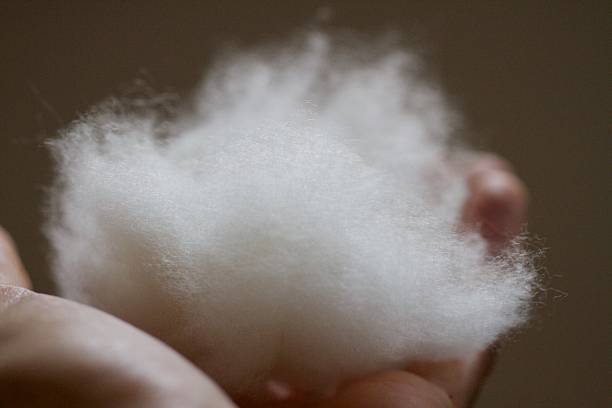
A battle in the microscopic world: the 19-micrometer line between life and death.
To truly understand the difference between cashmere and wool blankets, we need to talk about a core unit: the micron.
Human skin is a very sensitive sensory organ. Nerve endings can produce a “prickle effect” in response to any fiber larger than 30 micrometers in diameter.
This is why the coarse wool sweater your grandmother knitted when you were a child, though warm, always made you feel like ants were crawling all over your body.
Regular wool comes from sheep. Even high-quality merino wool typically has a fiber diameter between 20 and 25 micrometers. Although this is already quite fine, it is still on the verge of being “perceptible” to sensitive skin.
Cashmere, however, follows completely different rules. It’s not sheared but combed. It comes from the fine down that grows close to the skin at the base of the coarse hair of goats during the harsh winter. According to industry standards, only fibers with a diameter between 14 and 19 microns qualify as cashmere.
What does this mean? It means that cashmere fibers are more than six times finer than a strand of your human hair. When you are wrapped in a cashmere blanket, these extremely fine fibers bend under pressure rather than sticking straight up to your pores like coarser wool. This is the physics behind that “liquid-like” feel.
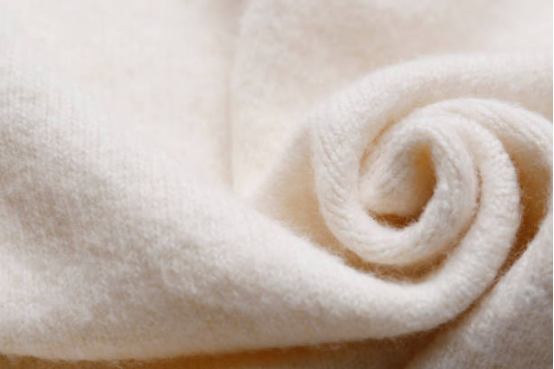
Production math problem: Why is your blanket more expensive than gold?
When you complain about why cashmere blankets are so expensive, take a look at these stark statistics.
An adult Merino sheep can produce about 3-5 kilograms of wool per year through shearing. This wool, after washing and spinning, is enough to make 3 to 4 standard-sized double blankets. This is a highly efficient industrial production line.
Now, let’s switch the focus to goats living on the Mongolian Plateau or in the deserts of Northwest China.
Cashmere can only be harvested during the spring molting season. Herders must use special iron combs to painstakingly comb the down from the goats, one by one.
During this process, an adult goat can only produce about 150 to 250 grams of raw cashmere per year. After removing impurities and coarse hair (the removal rate is about 50%), the final usable clean cashmere may only be about 100 grams.
Here’s a shocking conversion formula: to make a standard-weight pure cashmere blanket (about 1.5 kg), it takes the entire year’s cashmere production of about 15 to 20 goats.
You’re not just buying a blanket; you’re buying the essence of an entire flock of sheep for a year. This extreme scarcity is the strongest support behind the price tag.
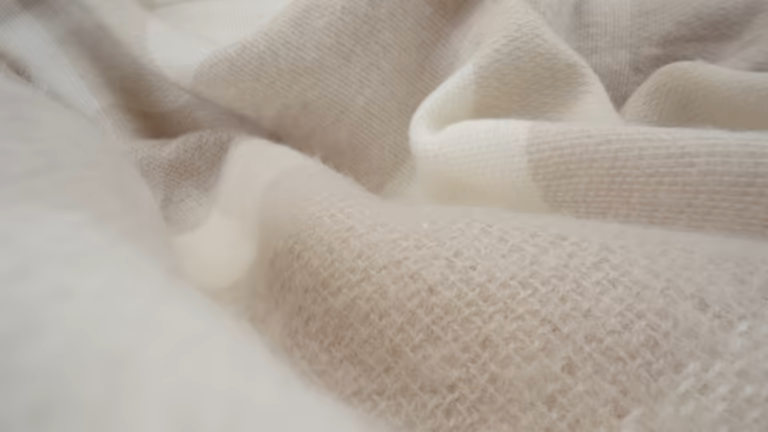
Insulation efficiency: the magic of air
Some people might ask, “If I don’t care about how soft it is and only care about how warm it is, wouldn’t it be more cost-effective to buy a thick wool blanket?”
Not necessarily. The magic of cashmere lies in its “weight-to-calorie ratio.”
Because cashmere fibers are hollow and have a higher crimp than wool, they can trap more still air between the fibers. Air is a poor conductor of heat, and this layer of still air acts as your body’s best insulating barrier.
Experimental data shows that, for the same weight, cashmere’s warmth retention is 3 to 8 times that of wool.
This means that a cashmere blanket so thin it can fit through a ring may provide the same warmth as a heavy wool blanket that makes it hard to breathe.
For those who dislike feeling “pressured” while sleeping, or for the elderly with poor blood circulation, cashmere offers more than just warmth; it provides a “weightless” comfort experience.
Beware of labeling traps: When “feel” becomes a lie
With the soaring price of cashmere, counterfeiting techniques have evolved to a level that is difficult to distinguish with the naked eye. You need to develop a keen eye to identify fake cashmere blankets.
The most common trap is called “wordplay.” You’ll see huge “Cashmere Touch” or “Cashmere Feel” labels on the packaging. Be immediately wary!
This usually means it’s 100% acrylic or microfiber. These petrochemical products, through special brushing and softening treatments, can indeed mimic the smoothness of cashmere upon first touch, but they are not breathable, are prone to static electricity, and will reveal their true nature after a few washes.
Another, more insidious trap is “blended fabric fraud.” Some blankets advertise “cashmere content,” but when you look at the smallest print in the corner of the care label, you’ll find 90% wool + 10% cashmere, or even 95% viscose + 5% cashmere.
That 5% cashmere, besides giving the seller a reason to double the price, offers almost no real benefit to improving the blanket’s overall performance.
Genuine pure cashmere will usually have “100% Cashmere” clearly stated on the washing label and will typically include the yarn count (e.g., 2-ply, 4-ply) and country of origin certification.
Combustion Test: The Devastating Truth
If you’ve already bought it and suspect you’ve wasted your money, there’s a destructive but absolutely accurate test: the Burn Test.
Pull out a small tuft of fiber from an inconspicuous corner of the blanket and light it with a lighter:
- Genuine cashmere/wool: It burns slowly, emitting a smell similar to burnt hair (because they are both proteins). The ash is black and brittle and crumbles into powder when rubbed.
- Counterfeit (synthetic fiber): It will burn violently, emitting black smoke and a pungent plastic or chemical smell. The ash will form hard, unbreakable black plastic balls.
Is this a worthwhile investment?
Going back to the original question: Is it worth spending five times more money on a blanket?
If you have two cats that love to scratch the sofa, or if you plan to take your blanket camping, then a durable, rugged, and inexpensive wool blanket is definitely a more sensible choice.
But if you’re looking for the ultimate sleep experience, the sense of security of being gently embraced on a cold winter night, or a gift for someone special that will last for ten years, then cashmere is irreplaceable. It’s not a fast-moving consumer good; it’s a family heirloom.
In this era saturated with industrial replicas, cashmere is one of the few products that still relies on nature’s bounty and the warmth of handcrafting. When you understand the rigorous selection process behind those 19 microns, you’ll realize that the expensive price tag is actually a tribute to nature’s finest materials.
Learn more about blankets, and easily understand the content.
FAQ (People Also Ask)
1. What are the differences in care between cashmere and wool blankets?
Although both are protein fibers, cashmere is much more delicate. Due to their extremely fine fibers, cashmere blankets are more prone to pilling and require regular care with a lint remover.
When washing, wool blankets can generally withstand machine washing on the wool setting, but cashmere is recommended for strict dry cleaning or hand washing in cold water with a special detergent. Never hang to dry to avoid deformation.
2. Why are some cashmere blankets so expensive?
If you see a “100% cashmere blanket” priced below $200, there’s a high chance something’s fishy. The main reasons are likely
- It uses low-quality recycled cashmere made from short fibers, resulting in extremely poor durability;
- The composition is mislabeled, with rabbit hair or viscose fibers mixed in;
- The yarn count is extremely low, resulting in a thin fabric.
High-quality virgin cashmere has a price floor due to raw material cost constraints.
3. How to identify fake cashmere blankets without burning them?
Besides checking the label, you can also use the “rubbing method.” Gently rub the two layers of blanket together.
Real cashmere will produce a unique “slippery” feel and slight resistance, and if you place your palm on it for a few seconds, you will clearly feel a warm feedback.
In contrast, synthetic imitation cashmere is usually excessively slippery (that’s the feeling of silicone fabric softener) and feels cold to the touch.