
When you finally squeeze into that cramped economy class seat after navigating the crowded boarding bridge, the first thing you usually do is look for that blanket sealed in a clear plastic bag. Looking at that package, you might feel a sense of comfort, even a strange sense of security: “It’s sealed, so it’s clean, right?”
Unfortunately, this may be one of the biggest illusions in modern air travel.
If you’ve ever experienced inexplicable itchy skin during a long-haul flight or slept soundly in a cold cabin covered in sweat, the problem likely isn’t with you but with that seemingly harmless synthetic blanket.
Today, we’ll discuss the cleaning secrets airlines don’t want you to know and why bringing your own equipment in this enclosed metal cabin isn’t just for comfort but also for survival.
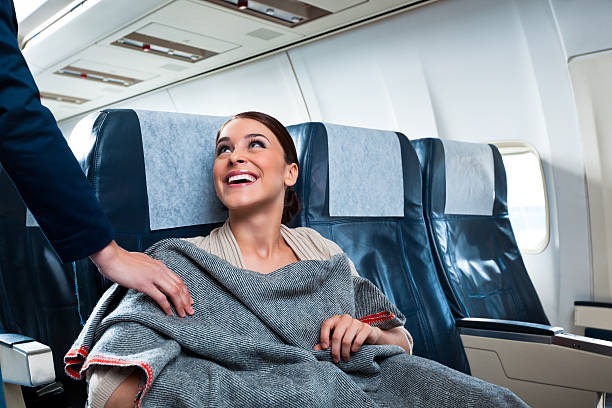
The truth about microorganisms after tearing open plastic packaging
Let’s confront the most unsettling question: Are airplane blankets washed?
If your flight is the first one in the morning, congratulations, you’re likely to get a freshly washed blanket. But what if your flight departs at noon or in the evening? The situation is less optimistic.
Multiple independent investigations into the airline industry (including one cited by the Wall Street Journal) have revealed a disgusting fact: most airlines only clean the economy class blankets during overnight downtime at the end of the day.
On subsequent flights that day, flight attendants typically just fold up the blanket used by the previous passenger and put it back in the plastic bag. Yes, that so-called “sealed packaging” doesn’t mean it’s sterile; sometimes it’s just a sign that it’s been “processed.”
Imagine that the thin blanket you’re covering yourself with right now might have been used by a passenger with a cold to wipe their nose just hours ago or placed under a baby’s feet.
At 30,000 feet, the low humidity in the cabin already weakens your mucous membranes, so wrapping yourself in a petri dish full of strangers’ skin flakes, oil, and even germs is tantamount to gambling with your immune system.
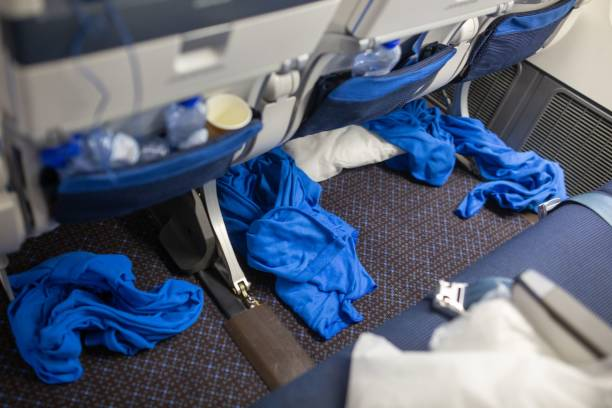
Cheap synthetic fibers vs. the nightmare of body temperature regulation
Putting aside hygiene issues, from a purely functional perspective, the standard equipment provided by airlines is a disaster.
To control costs and ensure washability, these blankets are made almost 100% from cheap petroleum byproducts—low-quality polyester fibers. This material has a fatal physical property: it is not breathable.
It wraps you up like a layer of cling film. When you’ve just fallen asleep, it can’t retain enough warm air to block the cabin’s chill, and when your body temperature rises slightly, it can’t expel moisture.
The result is the classic “long-haul flight syndrome”: you wake up with your back covered in cold sweat, and your body is still shivering. This cold-dampness effect is the number one killer of deep sleep.
Upgrade your flight defense system: Materials determine everything
Since airlines are unreliable, you need to build your own defenses. But when packing your luggage, every inch of space is precious; you can’t really stuff your down comforter into your carry-on.
At this point, the search for the best travel blanket for long flights must shift from “thickness” to “density” and “material technology.”
Ditch those bulky fleece blankets. True connoisseurs opt for travel blankets made of merino wool or high-count cashmere blends. This isn’t just because they sound luxurious but is based on hardcore biophysics principles.
Merino wool fibers have a complex internal structure that allows them to absorb up to 30% of their own weight in moisture and release it into the air, while simultaneously trapping a large amount of still air within the fiber crimp layers.
What does this mean? It means it can create a private “microclimate” for you. No matter how strong the cabin air conditioning is or how much heat your neighbor is radiating, wool can keep your body temperature within a constant, comfortable range.
More importantly, natural wool has natural antibacterial properties. The keratin environment on the surface of wool fibers is not conducive to bacterial growth.
Even if you wrap yourself in it for a 15-hour flight, it will still be fresh and odorless when you get off the plane—a stark contrast to a synthetic fiber blanket that is full of static electricity and attracts dust.
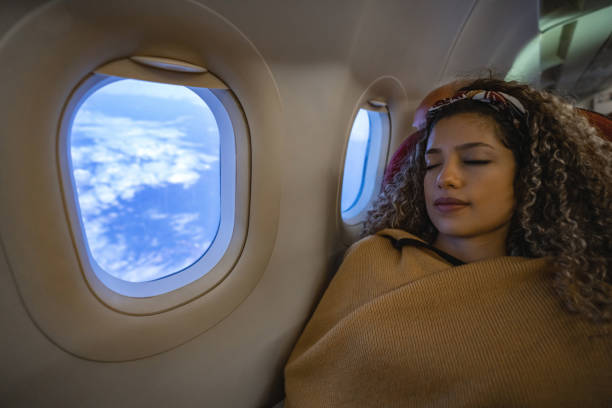
The Art of Space Management: Rejecting Clutter
Many people give up bringing their own blanket because they find it too troublesome. This is usually because they have chosen the wrong product.
If you’re stuffing your sofa blanket into your bag, it’s definitely a hassle.
But a professional compact warm blanket for travel is designed entirely differently. Top-tier travel blankets today typically use three-dimensional weaving techniques such as waffle or herringbone patterns, which provide an extremely high warmth-to-weight ratio even with a very thin layer.
You’ll find that a Merino travel blanket, large enough to cover your entire body when unfolded (approximately 170 cm x 120 cm), can fold down to the size of an iPad and weigh less than 400 grams.
It can easily fit into a side pocket of a carry-on backpack or be hung on the handle of a carry-on suitcase.
Some designs even come with a built-in storage bag, which can be used as a lumbar pillow when folded. This not only doesn’t take up space but is also actually a multi-functional space optimization solution.
Take back control of your personal space
In the cramped economy class, you can’t control the legroom, the crying of the child next to you, or the taste of the airplane food. But you can absolutely control the substance you come into direct contact with.
Bringing your own blanket isn’t just about keeping warm; it’s a ritual of demarcating a private space within a public area.
When you unfold that blanket—with its familiar scent, soft texture, and cleanliness—you’re essentially creating your own safe cocoon in the chaotic cabin.
Before your next flight, stop relying on airline plastic bags. Add this item to your carry-on list, and you’ll find it might be the most worthwhile travel investment you’ve ever made.
FAQ (People Also Ask)
1. Are the free blankets on airplanes really dirty?The blankets for the first flight of the day are industrially cleaned and repackaged. On subsequent connecting flights, flight attendants usually only fold and repack them, meaning you are likely to be using blankets that have been used by the previous passenger, which may contain skin flakes, bacteria, or even bodily fluids.
2. What kind of travel blanket is best for long-haul flights?Merino wool or cashmere are the preferred materials. These natural fibers have excellent moisture-wicking and temperature-regulating properties, preventing you from sweating and getting cold while sleeping. In contrast, cotton is too heavy and dries slowly, while synthetic fibers are prone to static electricity and are not breathable, making wool more suitable for the cabin environment.
3. How to choose a space-saving warm blanket? (Compact warm blanket for travel)Pay attention to the “warmth-to-weight ratio.” Look for products that use lightweight weaving techniques (such as worsted spinning). High-quality travel blankets usually come with a compression bag; when folded, their volume should not exceed the size of a water bottle, and their weight should be kept under 500 g to maximize portability without sacrificing warmth.