
At high altitudes, the temperature fluctuates wildly throughout the day, like an unpredictable atmospheric pressure system, constantly changing without any buffer. During the day, the sun can make your cheeks burn, but at night, it can suck all the heat away in minutes, leaving only a thin layer of coldness clinging to your skin. Many travelers are caught off guard by this stark contrast in temperature when camping for the first time at altitudes above 2500 meters. The sound of sand rubbing against sand outside the tent is particularly clear in the gentle breeze, and all the body craves is a simple yet reliable source of warmth—a true blanket suitable for the high-altitude environment.
High-altitude expeditions are always exciting, but the cold never seems to match the atmosphere. The higher you go, the drier, thinner, and less able the air is to retain heat. In this “rapid-cooling” climate system, the blanket becomes especially crucial, serving not only as a source of warmth but also as a core piece of equipment for maintaining a stable perceived temperature throughout the trip. Many experienced outdoor enthusiasts have shared similar experiences: once the night wind blows into the tent, thin thermal clothing seems to be sucked out, unable to keep up with the speed of the cold air. Therefore, a competent high-altitude blanket is not simply about being thick; it must balance being lightweight, warm, and portable—adhering to the entire logic of outdoor activities.
If you are planning your next high-altitude trip, after reading this article, you can visit our website to see real-life analysis of the relevant materials and structures. Many real-world examples can help you understand why different insulation designs perform completely differently outdoors.
Why do we feel colder at high altitudes?
The cold at high altitudes is not just about “low temperatures.” It’s more like a combined effect, layer upon layer, pushing the body into a state where it’s “even harder to keep warm.”
First, there’s the issue of air density. The higher the altitude, the thinner the air, which means poor heat conduction and weak insulation, resulting in a significantly faster rate of heat loss from the body surface. Especially at altitudes above 3000 meters, even when sitting still, one can feel body heat being quietly drawn away through the gaps in the skin by the wind.
Secondly, the temperature difference between day and night is extreme. In high-altitude areas, nighttime temperatures are often 15–20°C lower than daytime temperatures. Once the sun sets, cold air rushes out from deep within the mountains, quickly enveloping the entire campsite. Those accustomed to bringing “city-thick” winter gear often experience this difference on their very first night.
Finally, there’s the dry environment. The drier the outdoor air, the easier it is to cool down, and low-humidity air cannot provide a stable “warm layer.” In this environment, the value of a warm travel blanket is not just to block the wind but to help the body retain the flowing heat.
Many climbers have mentioned a detail: when they wake up in the middle of the night, their cheeks are always cold, and their breath dissipates quickly in the air. A blanket is the only barrier that allows the body to remain in a “sleepable” state.

The balance between lightness and warmth
For a blanket to work effectively in high-altitude environments, it must address two things: lightness and warmth.
Lightweight isn’t just about aesthetics; it’s about reducing physical exertion. The higher the altitude, the more strenuous the load, and outdoor enthusiasts know that every extra 300 grams adds unnecessary stress. Therefore, most outdoor users prefer lightweight outdoor thermal blankets, maximizing warmth with minimal weight.
However, lightness often means that insulation performance is easily questioned. Many beginners worry when using a lightweight blanket for the first time, “Can something so thin really keep me warm?” There’s a generally accepted view in the industry: the key isn’t thickness, but how heat is locked in. Loose structures, hollow fiber designs, and air-layer constructions are all common insulation strategies. They utilize the low thermal conductivity of air to trap heat generated on the body surface inside the blanket, rather than letting it be carried away by the night wind.
Different materials can also bring completely different experiences. For example:
- Some users have reported that the hollow fiber structure performs “surprisingly well” on cold nights, maintaining a comfortable temperature even when it’s windy outside.
- Another group of users shared that traditional thick cotton structures are “not quite up to par” at high altitudes because moisture tends to get trapped, and the insulation effect is greatly reduced once the fabric gets damp at night.
These real-life experiences make it clear that warmth in high-altitude environments does not necessarily depend on physical thickness, but rather on structural design.
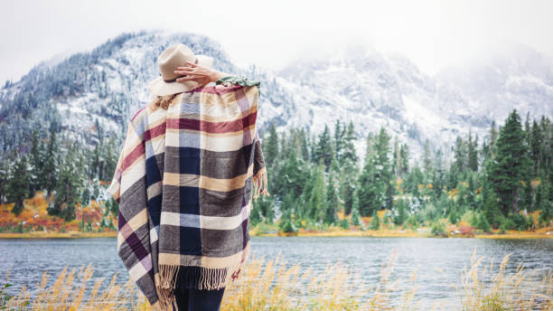
How to define the value of a Blanket in a given scenario
Not every blanket is designed for high altitudes. The outdoor setting itself already creates a significant gap in requirements.
When camping at night, you might place it on the outside of your sleeping bag to protect against the constantly flowing cold air inside the tent. When it’s windy, it’s the last line of defense against waking up from the cold. When it’s even colder, it also takes on the role of being compressible, quick-unfolding, and stable under extreme temperature differences.
Many experienced outdoor enthusiasts have shared similar scenes: in the early morning campsite, the ground is covered with a thin layer of frost, and the distant mountains are drawn out by the sunlight in delicate golden lines. You peek out from under the blanket; a cool breeze rushes to your nose, but your body still retains the warmth of being wrapped up. This sense of “balance between hot and cold” makes the whole journey much easier to bear.
In action scenarios, a blanket can be used in even more flexible ways. It can be worn while resting, slows down the rate of body temperature drop when waiting for sunset for extended periods, and even provides a reassuring warmth when sleeping in a vehicle overnight. Especially in high-altitude areas, outdoor enthusiasts have often mentioned the adage: if you feel even a little cold, it means it’s already too cold.
This is also the purpose of a high-altitude blanket—to create comfort in advance, rather than waiting until the body feels uncomfortable.
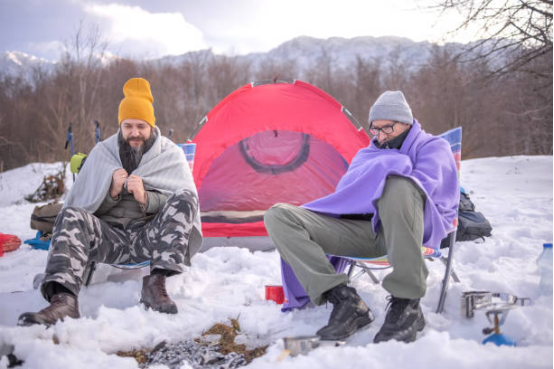
Psychological stability during high-altitude travel
Beyond simply keeping warm, Blanket serves another important function during high-altitude travel: “emotional stability.”
Many psychological studies have pointed out that temperature perception is highly correlated with a sense of security. The more extreme the outdoor conditions, the more people need stable tactile experiences to establish safety boundaries. Many users have shared that, in the cold nights at high altitudes, what helps them stay asleep is not the air temperature but the “continuous feeling of being enveloped” provided by a blanket.
Especially in environments with frequent winds, significant temperature differences, and dry air, a warm travel blanket can reduce the anxiety caused by body temperature fluctuations and allow the body to enter a resting state more quickly.
This seemingly minor warmth is actually the most underestimated source of comfort during outdoor trips.
The real differences brought about by different methods of keeping warm
purchasesA frequently discussed topic in the industry is: what kind of outdoor thermal blanket is truly suitable for high altitudes. While this article doesn’t offer any purchasing or recommendations, we can summarize several key differences based on feedback from actual users:
1. The difference between a fluffy structure and a skin-hugging structure is obvious.
The former is better at creating air layers, while the latter is better at resisting breezes. Both can provide warmth, but the experience is completely different.
2. Compressibility is a key factor that outdoor users care about a lot.
Many people have shared that if a blanket can be quickly unfolded before the temperature drops, the experience of “instant warming up” is very valuable.
3. Moisture resistance affects the quality of sleep throughout the night.
At high altitudes, the nighttime temperature is low, and condensation is common. If the blanket absorbs moisture, it may get colder and colder as you sleep.
These differences are not derived from theoretical deduction but rather from real-world feedback from numerous outdoor users in campgrounds, mountainside locations, and even campervan scenarios. If you’d like to further explore the comparisons of different structures, you can browse our website’s material analysis content. This is not a commercial recommendation, but it will help you understand from a design perspective why certain blankets perform better in extreme environments.
In areas where cold air descends more quickly, a blanket retains warmth.
High-altitude travel makes you feel the vastness and silence of nature, while the nighttime temperatures remind your body that the rules here are different from those in the city. Cold air descends faster than expected, the wind is sharper, and sleepiness is more easily disrupted. A suitable blanket is not an add-on to the gear list but the foundation of travel comfort.
If you are preparing for your next high-altitude trip, you might want to think about this question:
When the temperature suddenly drops at night, what helps you retain body heat?
If you’d like to learn more about how different insulation structures perform in outdoor environments, you can visit our website after reading this article for more in-depth material analysis and usage examples. Perhaps there, you’ll find the source of warmth for your own journey.