
At 3 a.m., you suddenly wake up again. Not because of a nightmare, but because of a familiar, burning sensation that spreads from your chest throughout your body—as if an out-of-control furnace inside you has been suddenly ignited.
Your pajamas are soaked with sweat, and you instinctively kick off the covers, but a few minutes later, the biting chill from the cooling sweat forces you to pull the covers back in.
This is the “Blanket Battle” that countless menopausal women experience every night.
If you’re looking for night sweats remedies, you might have tried several approaches:
- Adjusting room temperature
- Drinking cold water
- Even hormone replacement therapy
But as someone who has worked in the sleep textile industry for many years, I’ve found that people often overlook a crucial factor closest to their skin: their blanket.
Often, it’s not just hormonal fluctuations that exacerbate this discomfort, but also the wrong blanket that’s tightly “sealing” you in. Today, we’ll explore, from a textile science perspective, how to regain control of your sleep during this unique physiological stage by choosing the right blanket.

Why did your old blanket become an “accomplice”?
Before discussing solutions, we need to understand why traditional cotton or down comforters become ineffective during menopause.
One of the core characteristics of menopause is vasomotor symptoms, commonly known as hot flashes. During this process, your body’s temperature regulation center may misinterpret your body temperature as too high, thus triggering a heat dissipation mechanism—profuse sweating.
Traditional heavy cotton blankets or synthetic fiber comforters are typically designed for “warmth” and “insulation.” They work by trapping heat emitted by the body, creating a static heating layer.
Here’s why your traditional blankets might be working against you:
The Cotton Trap: Although cotton absorbs moisture, it dries very slowly. When you sweat, the cotton blanket absorbs moisture like a sponge and then clings to your body, feeling damp.
Heat Trap: When hot and humid weather hits, the body urgently needs to dissipate heat, but a heavy blanket traps the heat, causing body temperature to rise further, creating a vicious cycle.
You need more than just a covering; you need a “heat exchange system” that can breathe dynamically.
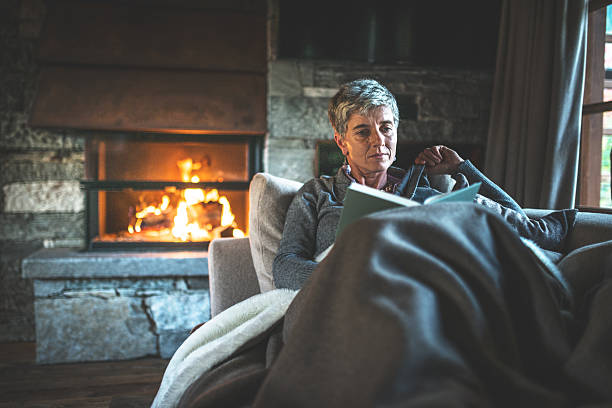
Unveiling the secrets of temperature regulation: From moisture wicking to phase change materials
To cope with these extreme and rapid fluctuations in body temperature, the new generation of menopause cooling blankets incorporates temperature-regulating fabric science. This is not a marketing gimmick but a material innovation based on physics.
1. And most importantly: Moisture-wicking
Blankets made of bamboo fiber (bamboo viscose) or Tencel (Tencel/lyocell) are recommended.
Unlike cotton, these regenerated cellulose fibers have a unique microporous structure. They can utilize the capillary effect to quickly absorb sweat from the skin’s surface into the fiber interior and rapidly conduct it to the outer layer of the blanket for evaporation.
These materials offer several key advantages:
Evaporative cooling effect: This process not only removes water but also carries away a large amount of heat from the body surface when the water evaporates, thus achieving physical cooling.
Antibacterial properties: The natural antibacterial environment of bamboo fiber can effectively reduce odor growth in sleeping environments where sweating is common.
2. Structure as function: Waffle weave
Besides the material, the weave of the blanket is equally important. If you look closely at high-end moisture-wicking blankets, you’ll find that many use a waffle weave design.
This uneven, three-dimensional mesh structure is not just for aesthetics. It creates countless tiny air pockets between the skin and the fabric.
This unique structure provides:
Air circulation channels: These air pockets allow excess heat to escape, preventing excessive heat buildup in the blankets.
Lightweight experience: Compared to the dense plain weave, the waffle blanket is lighter and reduces the feeling of pressure on the body, which is crucial for women in their sensitive periods.
3. Space-grade technology: Phase change materials (PCM)
This is currently at the forefront of sleep technology. Some high-end blankets are beginning to incorporate phase change materials (PCMs) into the fibers, a technology originally developed for NASA spacesuits.
Imagine that your blanket contains countless tiny capsules.
When your body temperature rises (hot flashes begin), the substances inside these microcapsules melt and absorb the excess heat generated by the hot flashes, thus slowing down the rise in body temperature.
When you stop sweating and your body temperature starts to drop sharply, these materials will solidify again, releasing the heat they just stored and preventing you from waking up from the cold.
This dynamic “peak shaving and valley filling” capability transforms Blanket into a smart thermostat.
Build your “sandwich” sleep system
Now that we understand the principles, how do we put them into practice? Simply buying a cooling blanket may not be enough; you need to build a layered sleep system.
For women suffering from night sweats, I recommend a “multi-layered, lightweight” approach rather than “one thick blanket.”
Consider these layers for your optimal sleep system:
For the inner layer: Choose an ultra-thin bamboo fiber blanket or sheet that comes into direct contact with your skin. Its job is to wick away sweat immediately.
Warm layer (optional): Place a lightweight waffle blanket on top of the cooling blanket. You can pull it up if you get cold in the middle of the night. The breathability of the waffle ensures that moisture can escape easily even with two layers.
Important: Avoid using high-thread-count, high-density bedding, as excessive density will hinder moisture permeation and significantly reduce its moisture-wicking function.
in conclusion,
Menopause is a natural part of a woman’s life, but that doesn’t mean you have to endure poor quality sleep.
When we talk about blankets, we’re not just talking about a piece of fabric, but about accepting and caring for the body’s changes. A good menopause cooling blanket, while not curing hot flashes, can physically break the vicious cycle of “heat-sweating-cold dampness.”
Say goodbye to those heavy, suffocating blankets. Choose fabrics that “breathe,” and understand your body’s temperature. During this special time, your body deserves gentler, smarter treatment.
FAQ (Frequently Asked Questions)
Q1: Are synthetic fiber blankets labeled “Cooling” really effective?
Many cheap “cooling blankets” on the market use polyester fibers with added cooling agents such as mica powder. Although they feel instantly cool to the touch (cooling sensation upon contact), polyester fibers are inherently poorly breathable and do not absorb moisture. Once you actually fall asleep and start sweating, they will actually make you feel stuffy and damp. For night sweats remedies, natural hydrophilic fibers (such as bamboo fiber) or genuine PCM technology are the long-term solution.
Q2: Can this thin, moisture-wicking blanket be used in winter?
Absolutely, but it requires a different approach. In winter, you can use a bamboo fiber blanket as a base layer (inner lining) and then cover yourself with a warm down comforter or wool blanket. This way, the base layer wicks away sweat from the skin, keeping you dry, while the outer layer provides warmth. Dry skin is warmer than damp skin and is less likely to catch a cold.
Q3: If breathability is required, why do some people recommend weighted blankets to menopausal women?
It’s a trade-off. Weighted blankets can alleviate menopausal anxiety and insomnia through deep touch pressure. However, traditional weighted blankets can indeed accumulate heat. If you’d like to try one, be sure to look for a specially designed “cooling weighted blanket.” These blankets typically use glass beads as filling (cooler than plastic beads) and have an outer cover made of bamboo fiber or Tencel fabric to balance weight and breathability.