
In dry winters or air-conditioned environments, many people have experienced this: lightly touching a blanket will produce a “snap” sound or even a slight electric shock.
While this phenomenon is often attributed to the material, the formation of blanket static electricity is actually a complex physical process involving humidity, friction, and charge transfer mechanisms, and it is not simply a matter of “wool fabrics being prone to static electricity.”
Humidity and environmental conditions: the primary factors in static electricity generation
Air humidity is one of the key factors affecting blanket static electricity.
Static electricity is less likely to accumulate in high-humidity environments because water molecules in the air increase the conductivity of the air, making it easier for the charge to dissipate.
However, in dry environments, especially indoor air-conditioned or heated environments in winter, the humidity is usually below 30%, and the blanket surface easily loses its free electron balance, causing the charge to accumulate on the fabric surface.
Studies have shown that the surface resistance of fabrics changes exponentially with humidity. The lower the humidity, the higher the resistance, and the faster the charge accumulates. This is why even gentle rubbing of a blanket can generate noticeable static electricity in cold, dry offices or airplane cabins.
Meanwhile, humidity affects blankets made of different materials differently. Natural fibers such as cotton are relatively less prone to accumulating static electricity under low humidity conditions, while synthetic fibers such as polyester or acrylic are more likely to form charges due to electron transfer.
This is not simply a “material issue,” but rather the result of the combined effects of the air medium, fiber conductivity, and ambient humidity.
Friction and charge transfer: the direct mechanism of static electricity generation
Friction is a direct trigger for fabric electrostatic buildup.
When two surfaces of different materials come into contact and move relative to each other, electrons transfer from the material with lower electron affinity to the material with higher electron affinity.
For Blanket, this means that when a user moves Blanket around on a sofa or bed, friction between the fibers causes a redistribution of charge.
This process can be explained by the “triboelectric effect.” The sequence of friction and the frequency of contact between different fibers determine the speed and intensity of charge accumulation. For example, when polyester blankets are rubbed against wool clothing, electrons are more easily transferred to the polyester surface, thus generating significant static electricity.
In addition, friction intensity, surface roughness, and contact area all affect static electricity accumulation. Rough fiber surfaces provide more contact points, thus increasing the amount of charge generated by friction. Soft, smooth fabrics, while having a large contact area, have a low coefficient of friction, resulting in relatively slow static electricity accumulation. Therefore, the structure and weave of the blank also directly affect static electricity formation.
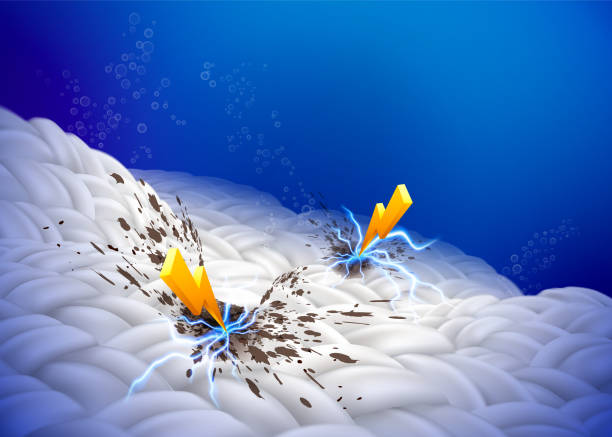
Charge Transfer and Storage: A Microscopic Physical Analysis
Once a charge is generated, its ability to be stored on the blanket surface depends on the fiber’s conductivity and surface condition.
Synthetic fibers are typically electrical insulators, making it difficult for electrons to flow, resulting in surface charges that cannot dissipate quickly. The more charge accumulates, the stronger the electrostatic effect.
In contrast, natural fibers such as cotton or silk have slightly higher conductivity, allowing the charge to dissipate more easily through moisture in the air.
In real-world scenarios, the performance of blanket static electricity is also affected by the conductivity of the object it touches. For example, when a blanket touches a metal sofa leg or clothing containing metal fibers, some of the charge is instantly neutralized, reducing the feeling of static electricity. However, when the blanket is completely suspended or covered by an insulating surface, the charge buildup reaches its maximum, and even a light touch can easily produce an electric shock.
Fabric electrostatic buildup becomes a concern for consumers in low-humidity and high-friction environments.
Usage scenario analysis: office, transportation, and home environments
To understand the conditions for static electricity to form in a blank, it is also necessary to consider the actual usage scenario:
- Office environment: With air conditioning running for extended periods, humidity is low. Synthetic fiber blankets tend to generate static electricity when turned over on chairs and may even attract dust and paper scraps.
- Long-distance travel or waiting at an airport: The air inside airplane or car cabins is dry, and passengers move around frequently. Friction combined with the low humidity environment promotes the accumulation of static electricity.
- Home environment: In winter, when the air is heated, the static electricity in the blanket is more noticeable in the bedroom or living room, especially when rubbing against polyester clothing.
- Medical care: In a hospital environment, static electricity, while not life-threatening, can cause discomfort due to frequent friction and may affect the use of intravenous catheters or other electronic devices.
These scenarios demonstrate that blanket static electricity is not a problem solely caused by fiber material but rather a result of the combined effects of environmental conditions, usage patterns, and fiber properties.

Scientific methods to reduce Blanket static electricity
Once the mechanism of static electricity formation is understood, static electricity accumulation can be reduced through environmental and physical interventions:
- Increase air humidity: Using a humidifier or placing a basin of water to maintain air humidity at 40%-60% can significantly reduce blanket surface charge.
- Reduce friction: Minimize direct friction between the blanket and clothing or furniture, for example, by using a soft covering or avoiding frequent handling.
- Using conductive materials: Introducing a small amount of conductive fibers (such as silver fibers) into blanket fibers or using antistatic spray can help dissipate the charge.
- Grounding method: Briefly contact the blanket with a metal object to allow the accumulated charge to neutralize naturally.
These methods differ from the simple approach of “changing materials” and are closer to physical mechanisms and practical environmental management, providing a scientific explanation for understanding fabric electrostatic buildup.
Understanding Blanket Static Electricity from a Physical Mechanism
In summary, static electricity in Blanket is not simply a material issue but rather a result of the combined effects of low humidity, frequent friction, and charge transfer mechanisms.
By understanding air humidity, friction, and the principles of electron transfer and storage, we can not only explain static electricity phenomena but also propose scientific mitigation strategies.
By systematically analyzing the conditions for static electricity formation, we can see that Blanket’s static electricity problem is not an unsolvable problem but a physical phenomenon that can be understood, measured, and managed. Mastering its scientific principles can not only improve user comfort but also enhance the professionalism of product design and market education.
For consumers, learning more about blankets can help improve their user experience.