As night deepens, the sound of the air conditioner becomes rhythmic and indistinct in the background.
You pull the blanket up to your shoulders, yet you still feel a part of your body slowly losing heat; or perhaps the opposite is true—a few minutes later you start to feel stuffy, toss and turn, and sweat. Many people would subconsciously conclude at this moment: Is the blanket not heavy enough?
This intuition is almost ingrained in consumer habits. The higher the GSM rating, the thicker it looks, the more solid it feels, and therefore the warmer it should be. However, from the perspective of materials science and thermal engineering, this logic does not hold true, and in many real-world usage scenarios, it can actually lead people to the opposite result.
If you consider Blanket’s “warmth retention” as an engineering problem rather than a sensory judgment, you’ll find that weight is only one of the most superficial parameters. What truly determines the perceived temperature is thermal resistance, fiber loft, and whether it constructs a stable, breathable air-locking structure. These factors combined constitute what we perceive as “warm” or “stuffy.”
When the meaning of blanket GSM is misunderstood: weight does not equal thermal efficiency
On e-commerce pages or product labels, GSM (grams per square meter) is almost always one of the most prominent metrics. It’s intuitive, quantifiable, and easy to compare. However, the essence of blanket GSM meaning is simply the mass of material per unit area; it doesn’t directly describe how heat is stored or blocked.
Within the textile industry, GSM (Gross Strength and Motion) is used more for controlling consistency and cost than for directly measuring comfort. A high GSM blanket often means denser fiber arrangement and more substantial material, but this does not automatically translate into higher insulation efficiency.
The problem is that the heat is not blocked by “weight,” but by “air.”
When fibers are too dense, the amount of static air that can be contained inside is reduced. Heat is more easily lost through solid conduction within the material, while moisture is difficult to expel in time.
The end result is often a feeling of not being warm enough, yet feeling stuffy. This is why many users find that after switching to high-weight Blanket blankets in winter, they are more likely to sweat at night and feel damp and cold when they wake up.
From the perspective of blanket warmth science, weight is merely a structural consequence, not the thermal management capability itself.
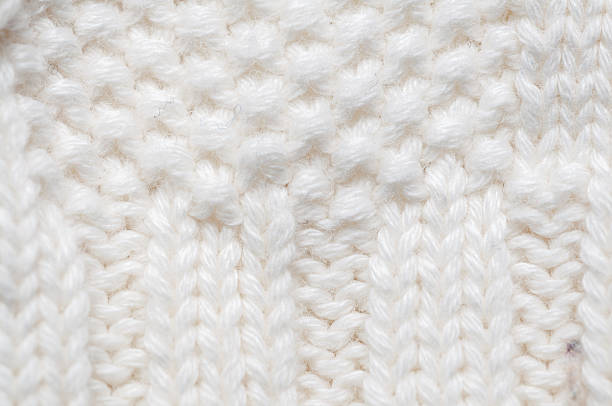
Thermal resistance is the core variable: the logic behind thermal resistance blankets
If we want to use a more accurate indicator to understand insulation performance, thermal resistance (often expressed as R-value or clo value) is far more explanatory than GSM.
Thermal resistance describes a material’s ability to impede the flow of heat. In the textile industry, it is highly correlated with the following factors:
- The static air ratio formed between fibers
- Is the structural thickness composed of “air” rather than “solid material”?
- Length of heat conduction path per unit time
A thermal resistance blanket doesn’t necessarily have to be heavy, but it must be able to reliably “trap” air. This is why mountaineering sleeping bags and professional outdoor blankets, while not visually extravagant, can maintain body temperature in extreme environments.
Comparative tests often reveal similar results: two blankets of the same size, one with a higher GSM rating but a lower thermal resistance than the other, which has a higher loft and a more open structure. The former feels thicker in a static environment for a short time, but its perceived temperature steadily decreases during prolonged use.
This is not a design flaw but a law of physics.
Fiber loft: The dividing line between “warm” and “stuffy”
If thermal resistance is the result, then fiber bulkiness is one of the key variables that determines the path.
High loft does not mean loose or cheap. On the contrary, it refers to the ability of fibers to form a three-dimensional supporting structure within a unit volume. This structure can:
- Maintain a stable air layer
- Rapid rebound after being compressed
- A buffer zone is formed between the body surface and the external environment.
When a blanket covers the body, the body continuously generates heat and moisture. If the fiber structure cannot rebound or wick away moisture in time, the air layer will be compressed and broken, and the thermal resistance will drop rapidly.
At this point, even if the blanket is very heavy, the feeling will quickly change from “warm” to “damp and cold.”
Many users’ real feedback focuses on this point: “It felt quite thick when I first put it on, but it got colder and colder as I slept at night.”
This is not an illusion but rather a manifestation of fiber structure failure under sustained load. In contrast, the well-lofted blanket, even though it is lighter, maintains relatively stable thermal resistance blanket performance throughout the night.

Air-cooled thermal insulation structure: an overlooked systemic design
A truly efficient Blanket is not simply “thick,” but rather has an internal air management system built in.
This type of air-cooled structure typically has several characteristics:
- Multi-layered or multi-directional fiber arrangement forms tiny air cavities
- The air chambers are isolated from each other to reduce convection.
- The structure allows for one-way release of moisture, preventing the accumulation of damp heat.
Only when these conditions are met simultaneously can Blanket maintain a relatively consistent warmth performance in different body positions and sleeping postures.
Conversely, a blanket, with its high weight but simple structure, is more like a dense covering. While it blocks airflow, it also blocks the path for moisture diffusion. Heat accumulates in a short time and then quickly dissipates due to increased humidity, forming a typical “stuffy-cold cycle.”
According to research findings from Blanket Warmth Science, air management capabilities are more important than the materials themselves.
This is why, when discussing upgrade solutions, the industry is increasingly shifting its focus away from GSM (Gas Management System) and towards structural design and thermal resistance performance.
Counterintuitive phenomena in user experience
If you pay attention to long-term user feedback, you’ll find an interesting trend: Blankets that are complained of being “too cold” are not necessarily the lightest, while those rated as “comfortable to sleep on” are often not the heaviest.
In-home environments, especially in heated or air-conditioned spaces, excessive weight can actually amplify temperature fluctuations. At night, body temperature naturally drops while humidity accumulates, and Blanket cannot adjust the microenvironment in time, leading to noticeable fluctuations in perceived temperature.
Some users who have long focused on living comfort will gradually develop their own judgment logic: they will no longer ask “how heavy” but will be more concerned about Blanket’s stability in different temperature ranges.
This experience is highly consistent with the conclusions of thermodynamics and fiber science.
The shift in judgment from “the heavier the better” to “structural priority”
Market education often lags behind scientific understanding. Weight remains the easiest selling point to understand and promote, but for users who truly value comfort, this logic is changing.
A more scientific framework for judgment typically includes:
- Do you understand the limitations of the blank GSM meaning?
- Do you pay attention to the overall performance of the thermal resistance blanket?
- Can you distinguish between “thickness” and “long-lasting warmth“?
- Have the long-term effects of humidity and airflow been considered?
When these factors are incorporated into the decision-making process, high gram weight is no longer an advantage in itself but just one of many variables.
Beyond weight, comfort is at its core.
Let’s go back to that first night. What truly puts you to sleep isn’t the weight pressing down on you, but rather the almost imperceptible yet ever-present sense of stable temperature.
The weight of the blanket isn’t wrong; it’s just that it’s been given too much meaning that doesn’t belong to it. When we shift our focus from numbers to structure, from tactile feel to thermal resistance, and from “thickness” to “stability,” the judgment naturally becomes clearer.
Perhaps the next time you touch a blanket, you won’t rush to ask how heavy it is but will subconsciously feel:
Does it retain air?
Does it allow you to breathe?
Does it still give you peace of mind several hours later?
This is where keeping warm truly begins.
Related Posts
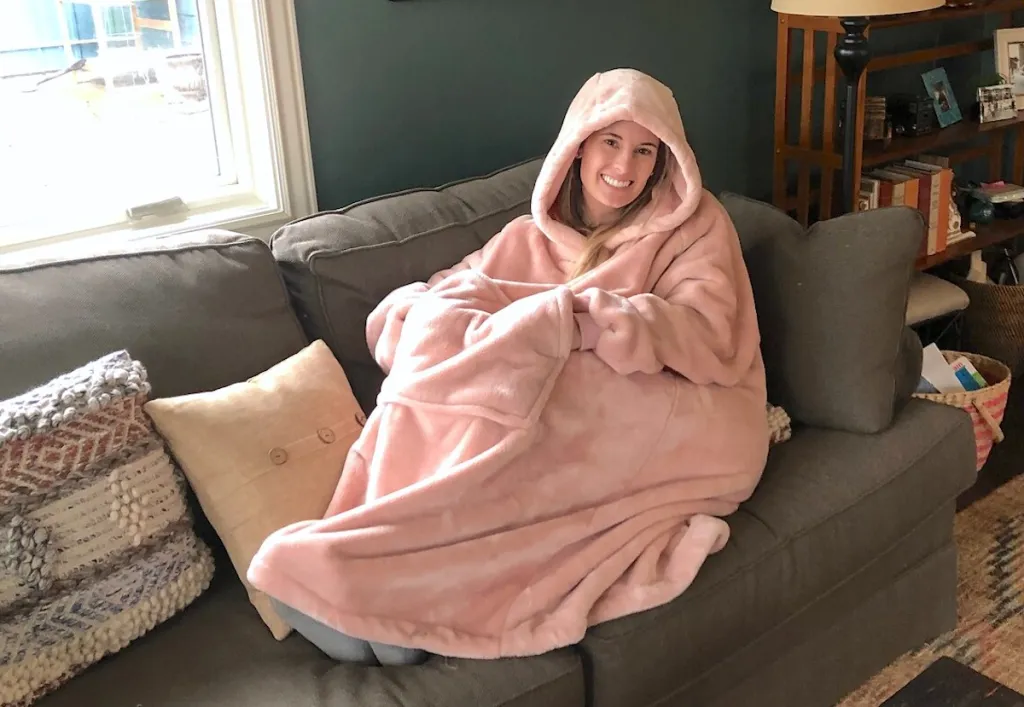
Wearable Blanket vs. Traditional Blanket : A Home Essential or “Fashionable Trash”?
-
Posted by
 Ted Eve