
Many people are struck by the word “formaldehyde” when they first encounter Blanket’s safety test reports. It sounds pungent and dangerous, almost automatically equating with unhealthiness.
Adding to the complexity, testing standards, limits, and methods vary significantly across countries, easily confusing consumers when interpreting results: Why do some reports state “qualified” yet still detect formaldehyde? Why does “zero formaldehyde” sound correct yet is repeatedly questioned by professionals?
To truly understand what the blanket formaldehyde test measures, we need to shift our focus from marketing rhetoric back to the textile industry and chemical safety itself. Formaldehyde doesn’t appear out of thin air, nor is it confined to a single product category; rather, it’s a long-standing and strictly managed variable within the textile production chain.
Where does formaldehyde come from? It’s not a single substance that was “intentionally added.”
Before discussing Blanket’s formaldehyde issue, it’s necessary to clarify one fact: most formaldehyde in textiles is not intentionally added as a “harmful additive.” It is more often an unavoidable byproduct of the production process.
In the textile industry, formaldehyde mainly originates from several processing stages:
- First, resin finishing is used to improve the wrinkle resistance, dimensional stability, and durability of fabrics. Some resins release trace amounts of formaldehyde during the curing process.
- Second, in the dyeing and finishing stages, some auxiliaries may decompose and release formaldehyde after high temperatures or prolonged storage.
- Furthermore, trace amounts may also remain in the raw fiber materials themselves during chemical synthesis or processing.
This means that Blanket is not an isolated case. All finished and processed textile products face the challenge of controlling formaldehyde residue. This is why textile chemical safety blankets have become an important part of global textile regulations, rather than a requirement specific to any one country or brand.
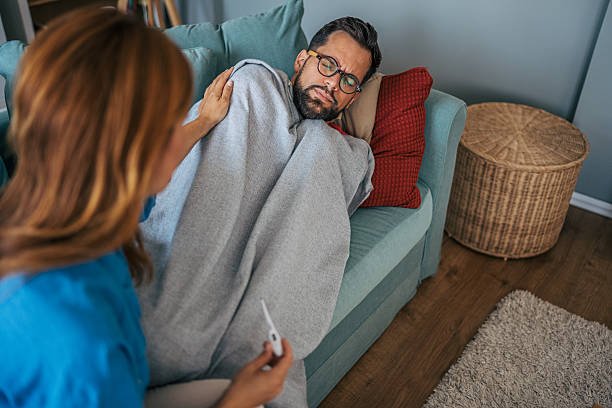
What exactly does formaldehyde testing measure? The method is more important than the result.
Many consumers focus only on a single number when reviewing test reports, neglecting the testing methods themselves. In fact, different countries and standards employ slightly different testing methods, directly impacting the comparability of test results.
Common methods for blanket formaldehyde testing include water extraction and gas chromatography:
- Water extraction simulates skin contact and sweat, releasing free formaldehyde from the fabric into water for quantitative analysis. This method is more relevant to everyday use and is therefore widely used in consumer textile testing.
- Gas chromatography focuses on detecting formaldehyde levels released into the air under specific conditions and is more commonly used in research or special applications.
The key point is that these tests measure the “releasable amount,” not the theoretical total amount present in the material. In other words, the test results reflect the level of formaldehyde a person might be exposed to under normal use conditions, not whether formaldehyde molecules are “present” in the textile. This point is often obscured or even ignored in marketing contexts.
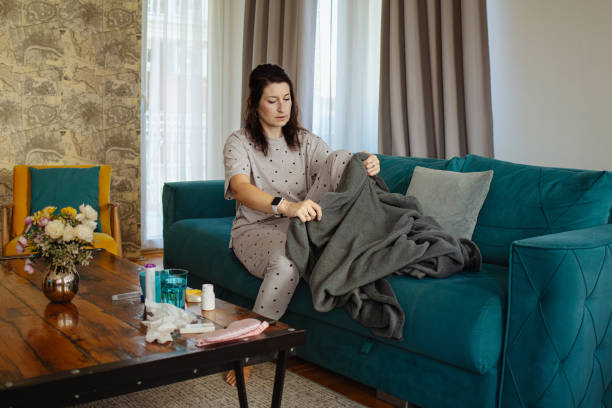
Where does the huge difference in the acceptable range come from?
If you compare blanket testing standards across different countries, you’ll find a clear pattern: the acceptable limits are not uniform. Some countries have extremely strict requirements for infant and toddler textiles, while others allow for higher tolerance levels for adult products. This isn’t due to inconsistent regulatory oversight but rather differences in usage scenarios and risk assessments.
Taking common international standards as an example, the formaldehyde limit for textiles that come into direct contact with the skin is usually much lower than that for non-contact products, and the standards for infant and toddler products are significantly stricter than those for adult products.
The logic behind this is clear: different contact frequencies, contact areas, and metabolic capacities naturally lead to different risk models.
Therefore, when consumers see discrepancies in test results from different blankets across different markets, a more reasonable interpretation is to consider the user group and application scenario, rather than simply judging safety based on “high” or “low.” Unsure how to choose? Take a look at Blankets here.
Why is the term “zero formaldehyde” easily misleading?
In marketing, “zero formaldehyde” has become an idealized label. However, from the perspective of textile chemistry, this claim itself is problematic.
First, at the detection level, every testing method has a detection limit. When the result is below the detection limit, the report is usually marked “not detected,” not “completely absent.” Equating “not detected” directly with “zero” is not rigorous in a scientific context.
Second, environmental background values are equally important. Air, water, and raw materials themselves may contain extremely low levels of formaldehyde, which does not necessarily indicate a health risk.
More importantly, safety does not mean “absolute zero,” but rather “controllable within a reasonable range.” This is why regulators in various countries focus more on the acceptable range of the blanket formaldehyde test rather than pursuing a theoretical zero value.
The use case determines the risk, not a single number.
From a user’s perspective, understanding the significance of formaldehyde testing isn’t about memorizing standards but about making more rational judgments. Blanket usage scenarios vary greatly: some are only used briefly on the sofa, while others are worn close to the skin for extended periods. Risk assessments should adapt accordingly.
For example, in scenarios involving prolonged close contact with the skin, formaldehyde release, ventilation conditions, and cleaning frequency all affect actual exposure levels.
Conversely, in occasional use in well-ventilated environments, even if test values are close to the upper limit, the actual risk may be very limited. This scenario-based assessment is the core of the regulatory logic behind the textile chemical safety blanket.
Some consumers have reported that the odor was quite noticeable when first opened, but it quickly dissipated after ventilation and cleaning. This does not mean it was initially “dangerous,” but rather that the volatile substances were effectively reduced after release. Understanding this process helps avoid excessive panic about test results.
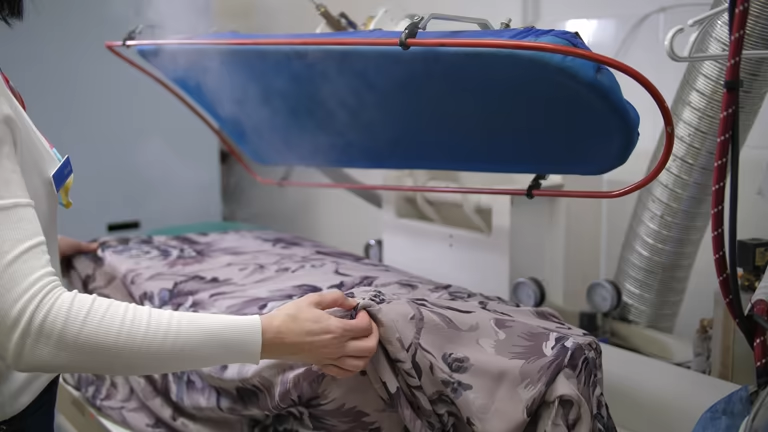
Security management from an industry perspective, rather than a one-off test
From an industry perspective, formaldehyde control cannot be achieved through a single blanket formaldehyde test. Mature textile safety management emphasizes process control:
- raw material selection,
- process optimization,
- batch sampling, and
- continuous feedback from market regulators.
This is why different countries, despite having different standards, can maintain a high level of consumer safety in practice. The differences in standards reflect different risk tolerance levels and regulatory approaches, rather than a neglect of health issues. Learn more about blankets.
Understanding testing is essential to seeing the boundaries of security.
Blanket’s formaldehyde test doesn’t simply answer the question “Is there formaldehyde?” but rather assesses “whether it poses a health risk under reasonable use conditions.” When we shift our focus from marketing labels to testing methods, acceptable ranges, and usage scenarios, much seemingly contradictory information becomes clear.
Perhaps the real question worth asking is when faced with complex test results, are we attracted by the promise of “zero risk,” or are we more willing to understand how risk can be managed scientifically? Understanding this is often more valuable than chasing a seemingly perfect number.