With the push of a button, damp fabrics can become warm and fluffy in 60 minutes—the dryer is undoubtedly a lifesaver for modern housework.
Especially for bulky bedding like blankets, waiting for it to air dry seems like an inhumanly long and agonizing ordeal.
But please stop reaching for the “Start” button.
You may be making an irreversible and expensive mistake.
That heated rotating roller, for certain blankets, is nothing short of a torture chamber.
Have you ever had the experience of excitedly opening the machine door only to find that your expensive wool blanket has shrunk to a baby size or that your once-soft faux fur has become as rough as burnt straw?
This isn’t just about shrinkage; it’s about the physical destruction of the fiber structure. Here, we’ll reveal how the high temperatures and centrifugal force of a dryer can instantly destroy these three specific materials and show you why, in the seemingly primal debate of air-dry vs. tumble-dry blankets, the former is the only solution to prolong the life of your beloved items.
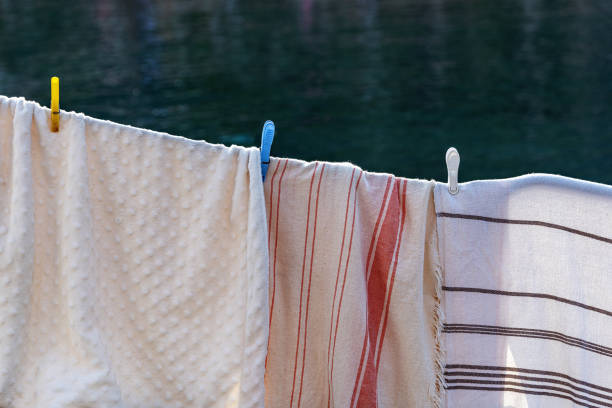
1. Wool: The Irreversible Tragedy of Feltification
If you have a merino wool or pure wool blanket, treat it as a living being, not just a piece of cloth.
Wool fibers are covered with tiny scales that resemble fish scales. In their natural state, these scales are closed and smooth.
However, when wool is subjected to the double blow of “heat and moisture + intense mechanical friction” in a dryer, disaster strikes.
Heat causes the scales to open, while the tumbling of the rollers causes the fibers to rub against each other violently and become entangled. This results in the scales irreversibly interlocking together and the fiber structure shrinking. This process is known in textiles as “felting.”
The result isn’t just a smaller size—you might find that a blanket that used to cover a double bed now only reaches your knees—but more critically, the feel changes drastically.
The once soft, fluffy fabric becomes stiff, thick, and inelastic, like cardboard.
Many people frantically search for “shrink wool blanket repair,” hoping to find some magical hair conditioner soaking method to reverse time.
While some relaxants can theoretically stretch the fibers slightly, the harsh reality is that once severe felting occurs, the physical structure of the wool has already changed, and it can never return to its light and fluffy state.
For wool, naturally laying it flat to dry is not an option but the only rule for survival.
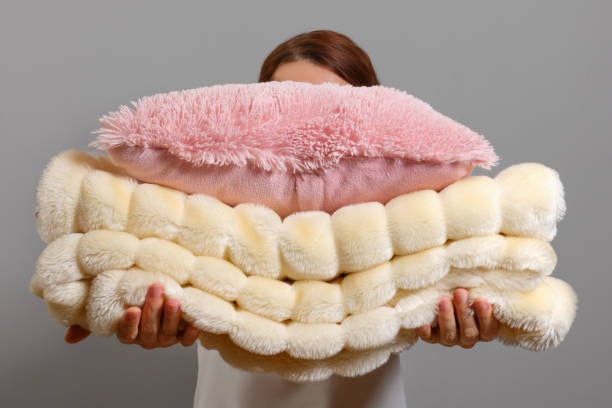
2. Faux Fur: When “Luxury” Turns into “Pyroplastic”
Faux fur blankets are a stylish addition to winter home decor, with their silky smooth texture being irresistible.
However, many people overlook a crucial fact: faux fur is essentially made of plastic (usually acrylic or polyester).
This leads to a frequently asked question: Can you put faux fur in the dryer?
The answer is an absolute, capital NO. Even the “low temperature” setting on a dryer can mean destruction for acrylic fibers as fine as a hair.
Plastic fibers are extremely sensitive to heat.
When exposed to the hot air of a dryer, the delicate tips of the fibers can curl, melt, or even stick together.
When you take the blanket out, you’ll find that the once smooth “fur” has turned into curly, rough, and even brittle lumps.
This heat damage is permanent; no matter how much fabric softener you use or how much you comb it, that smooth, cat-petting feel is gone forever.
In addition, static electricity is a major culprit. The drying friction inside the dryer can generate intense static electricity in synthetic fiber hair, causing it to frizz like it’s been electrocuted, completely ruining its drape.
3. Weighted Blanket: A Machine Killer
The first two scenarios refer to damage to the blanket itself, while this third scenario could lead to damage to your home appliances.
Weighted blankets are filled with tens of thousands of glass beads or plastic granules.
When you tumble a 15-pound or even 20-pound weighted blanket in a dryer, you’re essentially putting a giant centrifugal weapon inside the drum.
First, there is the physical impact. At high speeds, the heavy blankets repeatedly strike the drum wall like hammers, which is enough to damage the dryer’s balance ring and belts and even cause the drum to deform.
Secondly, there is the risk of leakage from the filling. The high temperatures of the dryer can damage the seams of the weighted blanket or the internal lining fabric. Once damaged, countless tiny glass beads will be ejected like bullets into the dryer’s internal mechanical structure. These tiny particles can become lodged in the motor, heating elements, or exhaust system, leading to extremely expensive repairs and even posing a fire hazard.
Patience is the price you have to pay when it comes to weighted blankets.
Air Drying: The Art of Time
Understanding the pros and cons of air-dry vs. tumble-dry blankets, you’ll find that “slow” isn’t a disadvantage but rather a form of maintenance.
Natural air drying doesn’t mean simply hanging them on a clothesline. For the three delicate blankets mentioned above, the correct drying method determines whether they can survive the next winter:
- The gravity countermeasure: Wool and weighted blankets should never be hung to dry. The weight of fabric increases dramatically after absorbing water, and hanging them will cause severe stretching and deformation. You must use a flat clothes rack or place several chairs side by side and lay the blanket flat on top of them.
- Avoid sunlight: Don’t assume that direct sunlight will kill bacteria. Ultraviolet rays will cause wool to yellow and become brittle and will also accelerate the aging of faux fur. A well-ventilated, shady place is the best location.
- Combing and Restoring: For faux fur, while it’s still semi-dry, gently comb it against the direction of the hair growth with a wide-tooth comb. This is the key secret to preventing clumps and restoring its fluffiness.
In Conclusion
In our fast-paced lives, we’re used to pursuing efficiency. But when it comes to caring for a high-quality blanket, efficiency is often the enemy of quality.
That wool blanket might have been passed down from your grandmother, and that faux fur might have cost you half a month’s salary. Risking ruining them just to save a day’s drying time is simply not a worthwhile investment.
The next wash cycle is over, and as that huge, wet clump is dragged out of the washing machine, take a deep breath and take it to the balcony or a ventilation rack.
Watching it slowly dry in the natural breeze and return to its original shape is a respect for quality of life. Remember, good things are worth waiting for.
Learn more about useful knowledge about blankets
FAQ
1. Is it really impossible to put faux fur blankets in a dryer?
Absolutely not. Faux fur is typically made from heat-sensitive synthetic fibers. Even on a dryer’s “low” or “air dry” setting, residual heat or friction from the rollers can cause the fiber tips to melt and matte. Once heat damage occurs, the smooth feel will permanently transform into a rough, “burnt plastic” texture that cannot be repaired.
2. How do air drying and tumble drying affect the lifespan of blankets?
The difference is significant. The high temperatures and mechanical tumbling of a dryer accelerate fiber aging, shedding, and pilling, especially for natural fibers (such as wool) and fine synthetic fibers. In contrast, air drying, while time-consuming, avoids heat damage and physical abrasion, allowing the blanket to retain its softness and structural integrity for longer, typically extending the product’s lifespan by 3-5 years.
3. If I accidentally shrink my wool blanket while drying it, is there any way to fix it?
It’s difficult to fully restore it, but you can try a last-ditch effort. Soak the shrunken blanket in a mixture of warm water and plenty of conditioner (or a special wool softener) for 30 minutes to relax the fibers. Then gently squeeze out the water (don’t wring it), lay the blanket flat on a bath towel, and gently stretch it outwards while securing the edges with a weight until it air-dries. However, this usually only restores part of the size, and the felted texture is difficult to reverse.
Related Posts
My white blanket has turned yellow? Please stop using bleach!
-
Posted by
 Ted Eve