
In the hotel corridors late at night, the air always carries a faint echo of the temperature control system. The moment you push open the guest room door, the first thing that catches your eye isn’t the light or the view outside, but the “weighty” blanket on the bed. High-end hotels seem to tacitly agree that as long as the blanket is thick and stable enough, the guest’s relaxation threshold will quickly drop.
This choice isn’t a remnant of traditional aesthetics buta systematic logic validated by user experience, involving material engineering and even brand strategy intervention. The thick blanket is not just bedding; it’s also an investment by the hotel industry in “tangible quality.”
How can a substantial, tactile texture establish trust with customers through their first touch?
Many hotel managers understand an unspoken rule: a guest’s first impression of a room doesn’t come from the window view or the minibar, but from the bed. More specifically, it’s the feeling of “Oh, I can rest assured here” that comes from unfolding the thick, inviting layer on top.
1. The subtle psychological connection between weight and security:
Compared with lighter covers, a heavier, denser layer naturally creates a sense of gentle pressure when touched. Psychological studies show that mild pressure can help the body ease into relaxation more quickly. This is why weighted bedding is becoming popular at home, and hotel-style versions deliver a similar message: stability, quietness, and a reliable sense of calm.
2. The quality of a luxury cover is not ostentatious but restrained.
High-end lodging follows a simple principle in bedding: “visually clean, tactilely rich.” The surface of these thicker layers often features short pile, tight weaving, or micro-brushed textures. These choices aren’t meant to show off; they provide a low-key yet precise tactile experience.
What you feel is not fluffy exaggeration but a steady, structured thickness that holds its form—an unmistakable reflection of the materials and craftsmanship invested behind the scenes.
3. Cross-regional adaptability—from temperature to touch:
Room temperature control varies widely across different cities and countries, and a well-constructed, heavier top layer adapts far better to these shifts. It doesn’t rely on bulk to retain warmth; instead, material density ensures consistent insulation.
This means that in cooler, air-conditioned rooms you won’t experience sudden chills, and in climates ranging from humid southern winters to dry northern colds, the comfort level stays stable.
Such consistency—recognizable instantly as premium—is what defines true hotel-grade bedding.
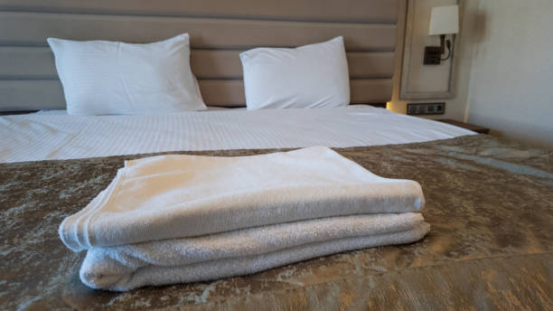
How has durability become the most “valued” underlying principle for hotel operations teams?
If tactile quality is what wows guests, then durability is a crucial performance indicator for hotel operations teams. High-end hotels aren’t afraid of a one-time investment, but they are absolutely terrified of a hotel “deformed after only six months of use.”
1. High-density structure provides excellent resistance to deformation.
Most high-end hotels use blankets that are not only thick but also have a denser internal fiber arrangement. Those in the hotel industry know that bedding is folded, made, stretched, and washed daily; any one of these processes can ruin a low-quality blanket.
The high-density structure allows the blanket to maintain its shape even under frequent changes and continuous high-temperature drying, preventing clumping, hardening, and linting.
2. Weave determines durability; fiber determines stability.
Hotels don’t list materials in rooms, but their purchasing departments scrutinize the numbers more closely than anyone else—weight, fiber length, transverse tensile strength, and abrasion test results.
High-end blankets use longer fibers because they are more wash-resistant and less prone to pilling; tighter stitching prevents seams from loosening after long-term use.
3. Hotel-grade blankets can withstand industrial-grade washing processes
. The force of a household washing machine is completely different from that of a commercial laundromat. Hotel blankets undergo high temperature, high pressure, and powerful spin-drying each time, followed by disinfection and rapid drying. Maintaining softness under such processes is a key indicator of “hotel-grade.”
This is why high-end hotels are willing to increase the cost of linens rather than choose thin styles that appear soft but cannot withstand washing.
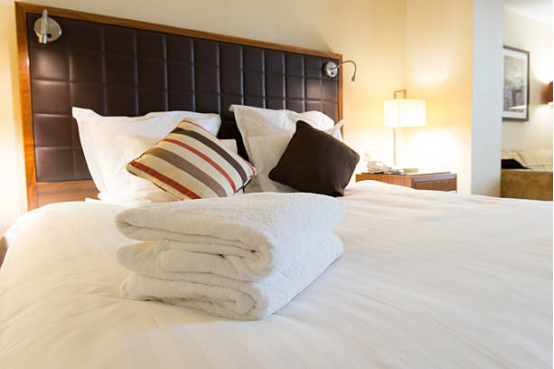
A thick blanket has “atmosphere dominance” within a space.
Space designers often say that bedding is the core of soft furnishings in a hotel room, most closely related to the person.
Thick blankets have become mainstream in high-end hotels because they can simultaneously enhance the room’s professionalism in terms of both visual appeal and atmosphere.
1. A sense of weight makes a room feel more “composed.”
Thin bedding tends to look flimsy, while a thick blanket makes the bed appear stable and layered.
Whether the hotel room design features wood, leather, metal, or even a touch of stone, a thick blanket can give users a sense of “maturity” and “stability” at first glance, a hotel atmosphere that thin bedding cannot provide.
2. Fiber textures can replace some decorations, making the overall style more sophisticated.
Many high-end hotels no longer pile on complicated decorations but focus on “tactile layers.”
The texture of the blanket will create natural shadows under light, making the bed more three-dimensional visually, so that even if the room design is minimalist, it will not appear monotonous or empty.
3. Unified materials create a clearer room theme.
From the warm tones of Asian resort hotels to the cool lines of Scandinavian hotels and the restrained color schemes of business hotels, thick blankets can quickly create a style loop.
Hotels aren’t just choosing blankets; they’re building a connection between their brand and the materials.
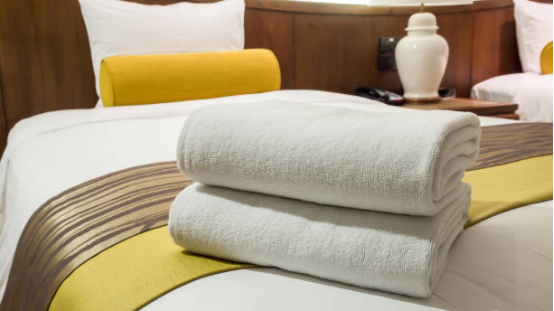
When Service Processes Meet Thick Blankets: The Underlying Operational Philosophy
This part is often overlooked, but it is crucial. The thick blanket actually precisely matches the hotel’s service logic.
1. Thick Blankets Make It Easier to Achieve “Standardized Bed-Making Aesthetics”
: Hotel staff often mention a detail:
Thin bedding looks good, but once there are differences in folding, smoothing, or stitching, they are immediately noticeable to the naked eye.
Thick blankets are easier to fix when making beds, are less prone to wrinkling, and have crisper folds, ensuring that every room achieves a nearly consistent, standardized aesthetic.
2. Reduces “Perceived Differences” in Customer Complaints:
A significant portion of hotel customer complaints actually stems from “differences between expected and unexpected experiences.”
The stable feel of thick Blanket bedding ensures guests are unlikely to experience complaints about it being “too thin,” “too cold,” “too soft,” or “too firm.”
It’s the least likely type of bedding in the industry to cause problems, reducing customer complaint management costs.
3. Better suited to year-round occupancy needs, simplifying operating cost structure:
For hotels, the more consistent the bedding experience across seasons and regions, the lower the management complexity.
Thick blankets are not only standard for hotel-grade blankets but also an operational asset that reduces the need for seasonal linen replacements.
Why is a thick blanket a long-standing consensus in high-end hotels?
From its tactile feel and durability to its spatial ambiance and operational efficiency, the value of a thick blanket goes far beyond mere aesthetics.
It embodies the pursuit of stability and quality in every detail by high-end hotels, is a tangible expression of luxury blanket quality, and is the reason why hotel-grade blankets have become an industry standard.
What makes you feel safest in a hotel room? Is it the temperature and lighting when you step into the room or the calming blanket? Feel free to explore further and share your observations.
Learn more about Blanket’s material structure and tactile engineering.