
From the golden sunlight streaming through the floor-to-ceiling windows to the gentle curtain of dim light beside the sofa at night, the living room is where our emotions settle in for the day. To create a space that is both comfortable and visually appealing, blankets are often the perfect finishing touch. This article will explore five key aspects: color, structure, texture, matching techniques, and daily maintenance. We’ll explain how to use blankets to enhance the overall ambiance of your living room, adding warmth and personality.
Color and Atmosphere: How Blanket Affects the Tone of a Space
The color palette of a space is the first layer of language that creates an atmosphere, and blankets are that “tone particle.” Choosing them well can transform a living room from calm to warm, from minimalist to soft, or simply add a finishing touch to a neutral palette.
- Tone-on-Tone:
When your sofa, carpet, or walls are primarily gray, beige, or ivory, a blanket that’s similar in color but with a slightly different brightness or texture can create a coherent and layered look. It won’t steal the spotlight, but it can enhance the quality of the details.
For example, a light gray fine wool blanket placed on a dark gray fabric sofa will create subtle shading through the light reflecting off the yarns. - If your space is dominated by a neutral or cool
palette, choose a contrasting blanket in a vibrant color (such as burnt orange, dark blue, or mustard yellow) and place it in the corner of the sofa. This creates a pop of color in an otherwise calming space. Designers often use this technique to enliven a space.
In Megan Moroney’s neutral living room, she uses a black and white patterned throw blanket (often called a blanket) as a focal point to create a sense of depth. - with a
geometric, plaid, or abstract pattern, be careful not to clash with other soft furnishings. A good rule of thumb is to use no more than three patterns: the wall texture, the pillow texture, and the blanket pattern; these three lines create a sense of rhythm.
Furthermore, the contrast between light and heavy textures is crucial: smooth wool vs. hazy suede vs. chunky crochet. A variety of tactile contrasts often create more textural tension than stark color contrasts.
Structure and Layout: Blanket’s “Morphological Language” in Space
Blankets are not only for covering but also for displaying things beautifully. They can be used in the layout of a space just like furniture.
- Layering:
For modular sofas, armchairs, or chaise longues, consider layering blankets and pillows. The innermost layer is a base blanket (neutral color, basic texture), the middle layer is a textured or lightweight fabric, and the outermost layer is a statement color or pattern.
Layering enhances the sense of depth in a space, creating a sense of unfolding layers rather than a single plane. From an interior design perspective, this approach bridges the gap between “surface” and “volume.” - Folding and hanging:
The neat and tidy folding method is perfect for minimalist or Japanese-style living rooms. Fold the blanket in three or roll it into a cylinder and place it on an armrest, side table, or stool for easy access without looking cluttered.
For living rooms with a Scandinavian or Bohemian style, hanging the blanket (using a blanket ladder or wrought iron rails) creates a more presentable space. The texture of the blanket, revealed when hung, creates a sense of depth, creating a sense of being part of the wall furnishings. Many design bloggers recommend hanging the blanket next to the sofa or against the wall. - layout
strikes a balance between neat and casual, and is a common technique in many modern living rooms.

Texture and Function: How Blanket Enhances Touch and User Experience
The feel of the fabric determines the intuitive experience of sitting or wearing it. If it’s too rough, it feels distant; if it’s too soft, it lacks structure and can easily appear sagging. A good blanket should not only be aesthetically pleasing but also functional and durable.
- The selection of materials should be comprehensive.
Wool, cashmere, Tencel, flannel, blended fibers, and eco-recycled cotton are all common materials for blankets.
Wool/cashmere: warm, elegant texture, suitable for autumn and winter;
Tencel or blended fabrics: breathable and smooth, suitable for spring and autumn or air-conditioned environments;
Recycled cotton or plant-based fibers: Eco-friendly choices, perfect for sustainable furniture styles.
When choosing, consult authoritative brands and material specifications to ensure fiber density and durability.
- patterns
Heavy-knit twists, sherpa fleece, and embossed patterns create a tactile experience. For a living room seeking a gentle atmosphere, a subtle velvet or woven texture is enough to evoke the touch.
Furthermore, edge details like tassels, hems, and seams enhance the sense of craftsmanship in close-up views. High-quality blankets often demonstrate meticulous attention to detail in their edges and corners. - If your living room is drafty or subject to significant temperature fluctuations, consider blankets with moisture-absorbing and temperature-regulating properties. Some modern blankets incorporate functional coatings (such as antimicrobial and antistatic) or temperature-regulating ingredients into their fibers, ensuring both aesthetics and practicality.
Matching strategy: How the blanket interacts with other soft furnishings
Blankets don’t exist independently in the living room; they form an integral part of the overall effect, complementing other soft furnishings such as pillows, carpets, and curtains. Only by properly matching them can the space be “fitted.”
- 3-5-7
“rule,” commonly used in space coordination, also applies to soft furnishings: Placing textured textiles (such as pillows, blankets, or the folded corners of the rug) on the sofa, side table, and rug creates a harmonious rhythm.
The blanket can serve as a focal point; avoid overcrowding or cluttering the soft furnishings. - If your throw pillows, curtains, or rug already have one or two primary colors, you can create a “jump.”
color scheme in your blanket. For example, if the curtains are dark blue and the rug has gray and white stripes, a burnt orange or light camel blanket can brighten the look. The “echo”
color scheme involves creating a subtle color in the blanket that echoes a surrounding accessory (such as a vase, decorative painting, or book) to create a visually “intentional” effect. - Choose blankets seasonally: For
For spring and summer, opt for lightweight fabrics and cotton and linen textures, while for fall and winter, opt for thicker wool or blends. Changing blankets with the changing seasons can also refresh the mood of your living room. Many decor bloggers recommend switching out blankets at the turn of the seasons to create a subtle “seasonal aesthetic” in your living room.
Daily maintenance and storage: keep your Blanket new and uncluttered
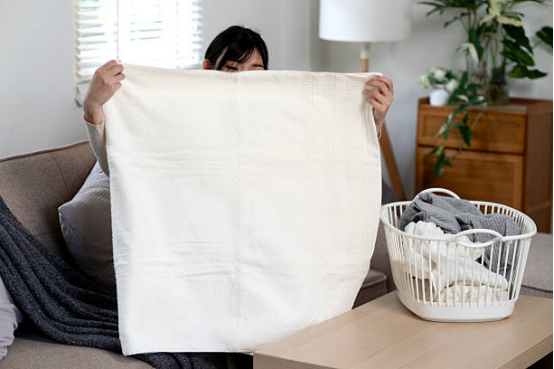
Even the most beautiful blanket needs good daily management to keep it in the living room and play its role for a long time.
- require different care, so please carefully check the label for instructions. Wool blankets may require dry cleaning
or a gentle cold wash. Blended or washable blankets should be washed gently in a laundry bag and lukewarm water. Avoid excessive pressure or direct sunlight to prevent deformation or fading. - Ideal storage solutions,
such as blanket ladders, wrought iron hanging rails, storage baskets, or built-in sofa storage, can balance aesthetics and convenience. Publications like Better Homes & Gardens offer a variety of storage options for blankets but recommend avoiding rolling them up in plastic bags to prevent moisture from accumulating in the enclosed space.
If blankets are frequently used in the winter, they can be hung; in the summer, they can be folded and stored in a breathable fabric bag or drawer. - Rotate blankets to reduce wear
. If you have two or more blankets at home, it’s recommended to rotate them so they can “rest” and recover, which helps extend the fiber life. The side you sit on most often is more susceptible to friction, so rotating them evens out wear.
Let Blanket become the “invisible magician” of the living room atmosphere
blanket next to the sofa HYPERLINK “https://saleblankets.com/shop/”. It shouldn’t just be a covering but a “soft language” that creates a sense of ambiance and stirs your spirit.
Through the tone of color, the layout of the structure, the touch of the texture, the rhythm of the matching, and the details of maintenance, the blanket can silently tell the story of your home style and attitude towards life.
May your living room always be a place where light and shadow dance gently with fabrics.