
In small-apartment living, space is never a neutral entity. Every item is repeatedly weighed for its rationale: does it take up space, is it difficult to store, or can it only serve a single purpose?
When living space is compressed to its limit, life itself begins to demand that objects “say more.” It is against this backdrop that the meaning of the blanket has gradually shifted from a heating device to a more structured spatial tool.
Its value is not immediately apparent, yet it continuously impacts multiple aspects of daily life—from storage efficiency to functional switching, from visual order to psychological well-being.
In the context of the small apartment, the blanket is more like a soft infrastructure than an accessory.
When storage becomes a frequent activity, the space advantage of a blanket begins to show.
In small apartments, tidying up isn’t just a weekend activity; it’s a daily, repetitive process of space management.
Items need to be quickly placed, retrieved, and put back. Anything that can’t be compressed or “temporarily disappeared” creates visual and psychological stress.
In this respect, the advantage of a blanket is very clear. Unlike cushions or functional furniture with fixed volumes, a blanket is highly adaptable in shape and height.
It can be folded, rolled up, or flattened to fit into previously fragmented spaces without disrupting the overall layout:
- drawers
- storage baskets
- under sofas
This “compliance” with space is precisely why space-saving blankets are frequently mentioned.
Many residents of small apartments in the city center mentioned that their most frequently used blanket is often not the thickest or most conspicuous one.
It is rather the one that is almost unnoticed after being tidied up, yet can be put back into use at any time. It doesn’t reduce the area occupied but rather the friction costs in space management.
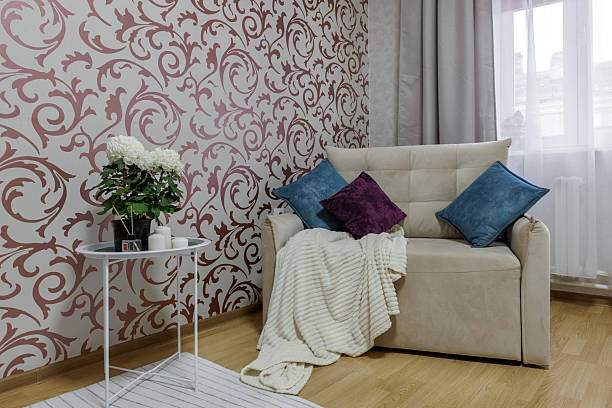
Using a multifunctional blanket is a practical strategy in small spaces.
Multifunctionality is a plus in large spaces, but in small spaces, it’s almost a survival strategy.
Any item that can only serve a single purpose will seem superfluous when not in use.
Under this logic, the use of a multifunctional blanket is not a deliberately designed selling point but a naturally formed way of using it. A blanket may be used in various ways:
- draped over the shoulders in the morning to ward off the cold,
- laid on the floor during the day as a temporary cushion,
- returned to the bed at night to participate in the construction of the sleep system.
It does not require complex structures or transformation mechanisms but only relies on the flexibility of the material itself and the user’s intuition.
From a space efficiency perspective, this ability to switch uses significantly reduces item redundancy.
Every item that can only do one thing is removed, meaning that some mobility is freed up in small apartments, and Blanket happens to have this natural cross-scenario adaptability.
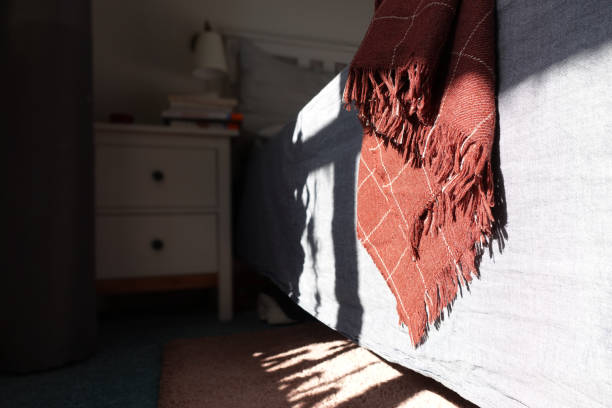
Blanket, as a visual partitioning tool, doesn’t stand out.
The common problem with small apartments is not just insufficient space but also the mixing of functions.
When sleep, work, and leisure are compressed into the same visual area, it is difficult for people to psychologically switch between these states. This long-term sense of ambiguity gradually consumes attention and energy.
In interior design and spatial psychology, visual zoning has proven to be an effective way to alleviate spatial tension.
The blanket is one of the most easily overlooked tools for this purpose:
- When casually draped over a sofa back, it subtly suggests a resting area.
- When placed in a corner of a bed, it gives the sleeping space a boundary.
The entire process requires no physical partitions, yet it creates depth and dimension in the space.
Unlike screens or fixed partitions, the advantage of a blanket lies in its reversibility.
It does not permanently change the spatial structure but rather appears or disappears at any time according to the rhythm of life. This flexible visual guidance is especially important for small spaces.
From the perspective of spatial psychology, the sense of envelopment brought by a blanket
Space is not only a physical concept but also a psychological experience.
Research shows that soft, coverable items can reduce the intensity of environmental stimuli and provide users with a sense of security, like being enveloped. This effect is particularly pronounced in small apartments.
Many people subconsciously use a blanket even in temperature-controlled environments, not entirely for warmth, but to create a controlled “personal area” within a limited space.
Here, the blanket functions more as a psychological buffer than simply a piece of fabric.
From this perspective, the small apartment blanket is not about filling a lack of space but about helping users establish a more stable relationship with their space.
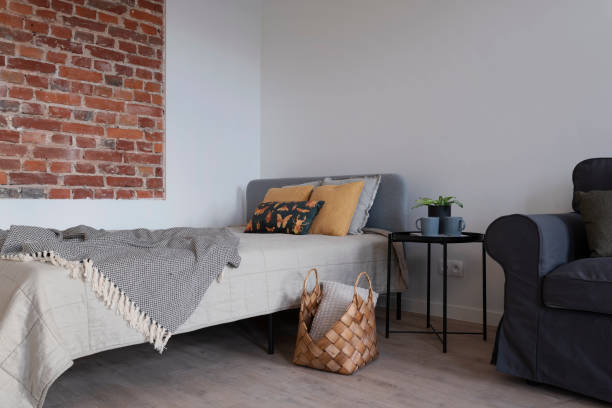
A shift in perception from “occupying space” to “adjusting space.”
Traditionally, a blanket is an item that needs to be properly stored; however, in the context of small apartments, it’s more like a space regulator.
- When it’s folded up, the space becomes uncluttered.
- When it’s unfolded, new functions are quickly created.
- When it’s removed, everything can be immediately reset.
This approach of participating without leaving structural traces makes the Blanket one of the few objects that can alter the state of a space without permanently occupying its space.
For this reason, its value in small-space living is often underestimated, yet it continues to play a vital role.
In small spaces, what’s truly important is often not the “large items.”
In a large house, a blank space may just be a part of life.
But in a small apartment, it often plays the role of a space arranger. It has no fixed location and does not emphasize its presence, but it completes the division, transformation, and soothing at key moments.
Perhaps the next time you organize a limited space, you can re-examine that blanket:
Is it really just “an extra thing,” or is it helping the space remain flexible?
In small living spaces, the answer is often more important than the area itself.