
In humid climates, a warm, soft blanket can easily become damp and moldy if not stored properly, and it can also become a target for clothes moths and other microorganisms. Imagine opening your closet to find a musty smell and your soft blanket covered in insect bites—that’s enough to make you feel down. To avoid this problem, this article provides practical blanket storage solutions from four aspects: material properties, moisture-proofing strategies, insect prevention techniques, and long-term care, ensuring that every blanket stays safe, dry, and like new for a long time.
Table of Contents
Understanding the impact of Blanket material differences on storage
The material directly determines storage requirements in humid environments:
- Natural fibers: Wool, cashmere, and cotton items are highly absorbent and easily pick up moisture from the air. Prolonged exposure to damp conditions can lead to mold growth, and these fibers are also attractive to clothes moths. They must be thoroughly dried before storage and kept in breathable cotton or linen bags or wooden cabinets.
- Synthetic fibers: Polyester, acrylic, and other chemical fibers are relatively resistant to moisture and pests, but they can still develop mold under prolonged high humidity. Choosing moisture-proof storage boxes or adding desiccants helps reduce the risk.
- Blended materials: Combining natural and synthetic fibers offers both softness and durability, but storage must account for both fiber types. Without proper moisture-proofing, the natural portion may still absorb water, causing localized mold growth.
Understanding material properties allows targeted measures before storing to maximize fiber protection and minimize damage.
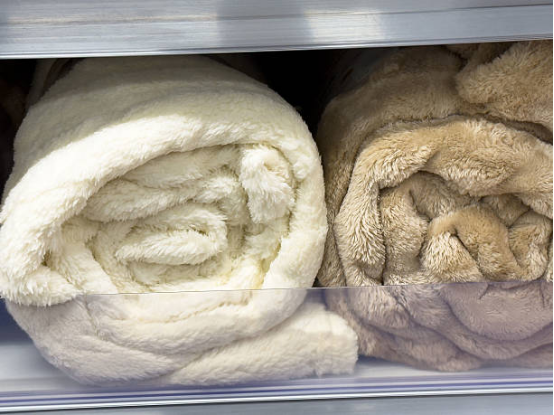
Moisture-Proof Storage Process
A damp environment is the main threat to stored textiles. Scientific moisture-proofing strategies can extend the lifespan of soft furnishings:
- Thorough washing and drying: Clean items completely before storage to remove dust, sweat, and oil. Natural fibers are best air-dried until fully dry to avoid residual moisture.
- Choose breathable containers: Cotton or linen storage bags allow air circulation, prevent moisture buildup, and reduce mold. Avoid fully sealed plastic bags in humid areas.
- Desiccant aid: Silica gel packets or activated charcoal maintain low humidity. For long-term storage, this step effectively prevents mold spores and microorganisms.
- Regular ventilation checks: Even in ideal conditions, open storage periodically to ventilate and ensure fibers stay dry.
Industry research shows that wool and similar natural fibers can retain over 80% of their original softness and fluffiness after two years in proper storage.
Insect Control and Long-Term Protection
Pests are often overlooked during storage, especially for natural fiber items:
- Natural repellents: Cedar blocks, lavender sachets, and camphor chips repel clothes moths. Regular replacement maintains effectiveness.
- Sealing and isolation: Double-layer breathable storage bags or zippered boxes provide physical separation, reducing dust and friction damage.
- Off-floor storage: Avoid placing items directly on the floor or against walls; use shelves or trays.
- Periodic sun exposure: Every 2–3 months, natural fibers should be sun-dried to kill microorganisms and restore fluffiness.
With these measures, natural fiber items can remain soft and almost free from insect damage for over a year, even in humid environments.
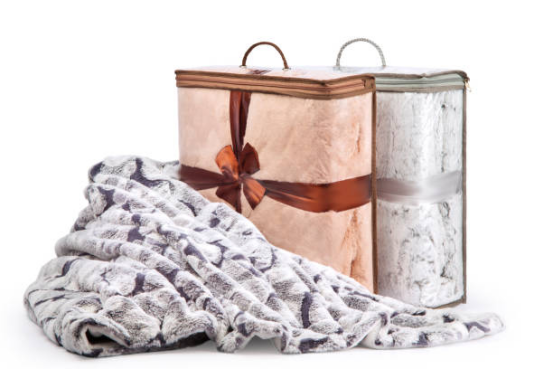
Blanket organization tips
Scientific organization is just the foundation; daily care and good storage habits are equally important.
- Lightweight folding and rolling: Avoid over-compressing the blanket to prevent fiber deformation and loss of elasticity. For large blankets, consider gently rolling them up for storage.
- Layered storage: Multiple blankets can be separated by dividers or storage boxes to prevent them from rubbing against each other and to facilitate regular rotation.
- Temperature and humidity monitoring: The storage space is kept at approximately 20°C and 50% humidity, effectively reducing the risk of mold and pests, and is suitable for most household environments.
- Regularly turn over and inspect: Even blankets stored for a long time should be taken out and turned over regularly to check the fiber condition and ensure that insect and moisture prevention measures remain effective.
With these long-term care measures, your blanket can remain dry, soft, and fluffy, even during the wettest and rainiest seasons.
Scientific organization gives every blanket a new lease on life.
Blankets are not only essential for winter heating but also a key element of home comfort. In humid environments, through scientific cleaning, drying, moisture-proofing, insect-proofing, proper storage, and long-term care, each blanket can have its lifespan extended while maintaining a soft touch and fluffy texture.